
For homeowners in Ocala & The Villages: a 2-hour visit that shows what's really happening inside your AC. Every reading is measured against the manufacturer's specs for your exact model, and you get written findings you keep. No upsell pressure. No "you need a new unit." Just the truth.
★ 4.9 on Google · 150+ Reviews · Best of 2026 · BPI Certified

BusinessRate named FL HVAC Services a Best of 2026 Air Conditioning Contractor in Ocala, based on real Google reviews from homeowners like you. We earned it the same way we do every job: showing up, finding the real problem, and fixing it right. Thank you to every homeowner who trusted us.
Real Google reviews from homeowners in Ocala, The Villages and nearby towns.
The cheap $59 tune-up isn't really a tune-up. You've felt it. A tech spends 20 to 40 minutes running a quick checklist: a few parts tested, a quick reading or two, the drain line cleared, the coil rinsed, a new filter.
Those checks can catch a dead part. But nothing gets measured against what your equipment was actually designed to do — and that's exactly where the real problems hide.
Sound familiar?
Here's what most homeowners never get told: these problems almost never come from the equipment itself. They come from how the system was installed, how it was set up and how it's actually performing. A quick tune-up doesn't measure any of that, so it can't find any of it.
So the visit ends one of two ways: "everything looks good," or a pitch for a new system. And the moment you mention a hot room, humidity or mold, the pitch gets stronger — because the goal was never to find what's wrong. It was to sell you a new unit.
And once you understand what the $59 visit is actually designed to do, the whole pattern makes sense.
That's not what this is.
This page exists because there's a different way to do this work — one that takes real time, real instruments, and a real comparison of your system's performance against the manufacturer's published specifications. It costs more than $59. It's worth multiples of what it costs. And by the time you finish reading this page, you'll know exactly why.
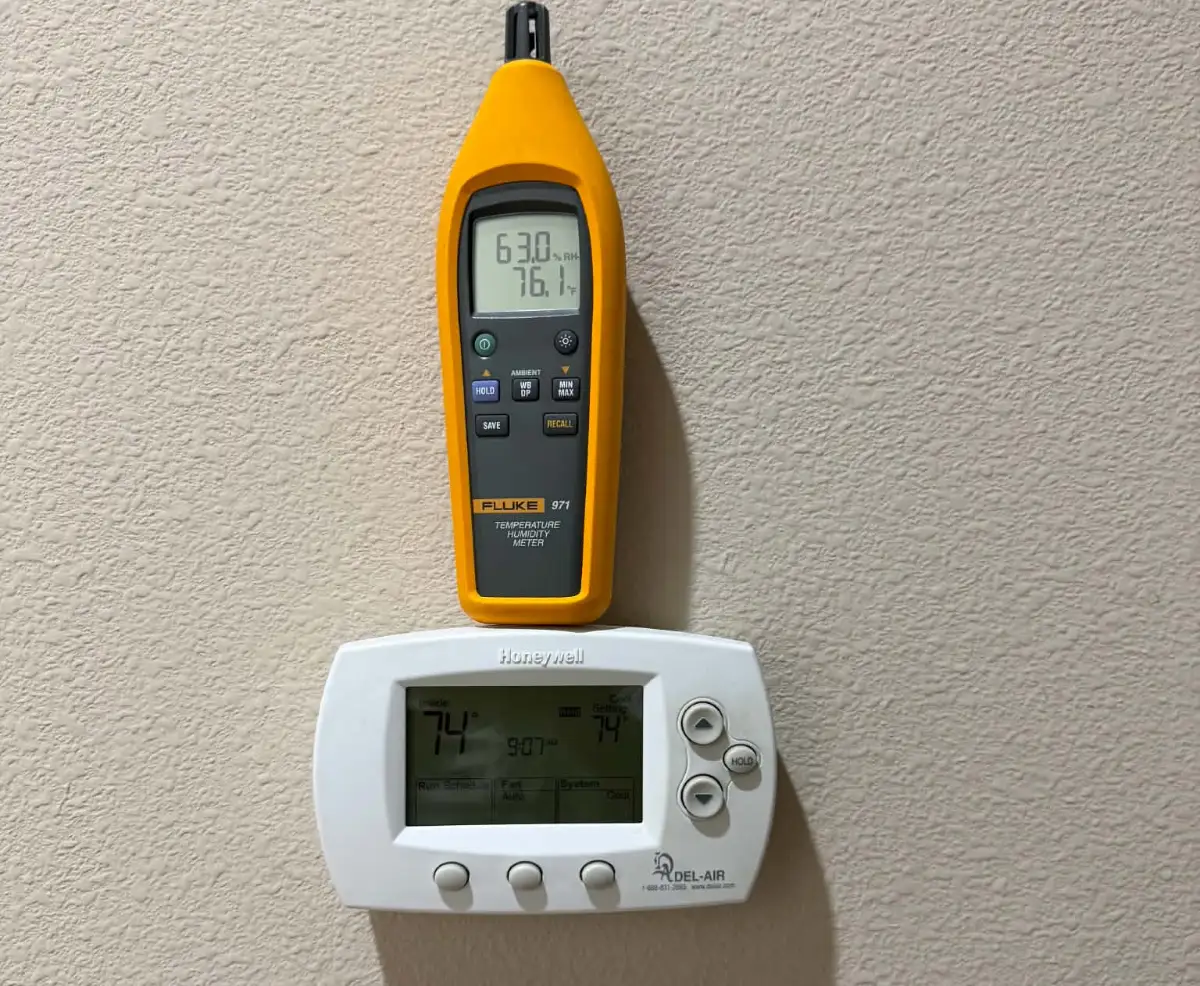
The thermostat says 74° and does not have a humidity reading. The meter says 76° and 63% humidity. That's why the house feels sticky no matter where you set it.
“Homeowners assume the equipment is failing them. It usually isn't.”
Is one room always warmer? Does the air always feel sticky? Is the bill still climbing?
Here's what happens when we come out.
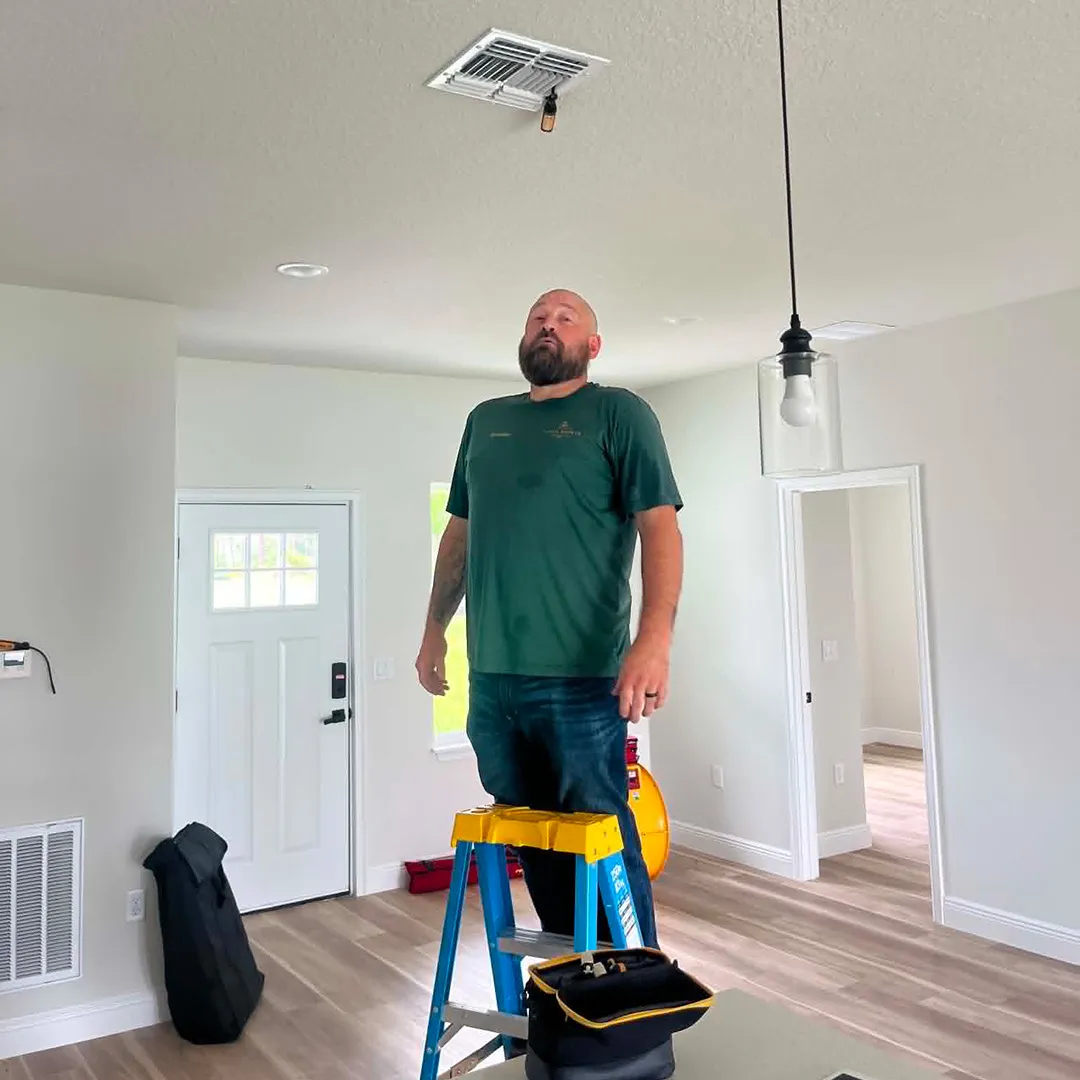
Every room. We're looking at the things the unit has to fight against — which rooms run warm, which run cold, where the returns and supply vents are, how the home is built, where heat is getting in. The unit doesn't operate in isolation. The home is part of the system, and most comfort problems start with how the home and the unit are interacting.
Voltage, current draw, pressures, temperatures, airflow, humidity removal — every measurable performance point your system is supposed to hit. Not a few easy readings most companies stop at. The full set.
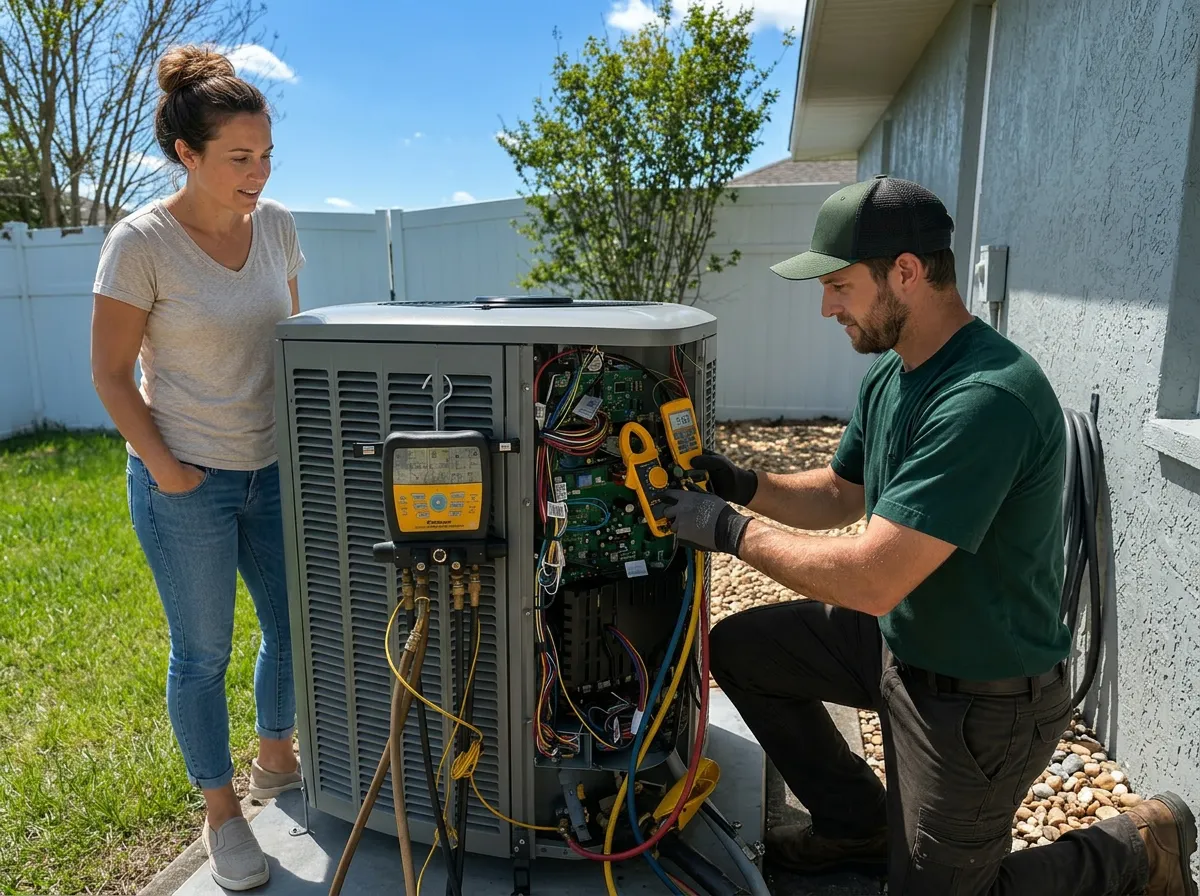
This is the step that almost never happens on a $59 visit, because it takes time and it takes training. Your equipment was engineered to perform within a specific range. We have access to those ranges. We compare what your system is actually doing to what the engineers said it should be doing.
Every reading. Every comparison. Every deviation from spec, if there are any, with a clear explanation of what that deviation means for your comfort, your bills, and the lifespan of your equipment.
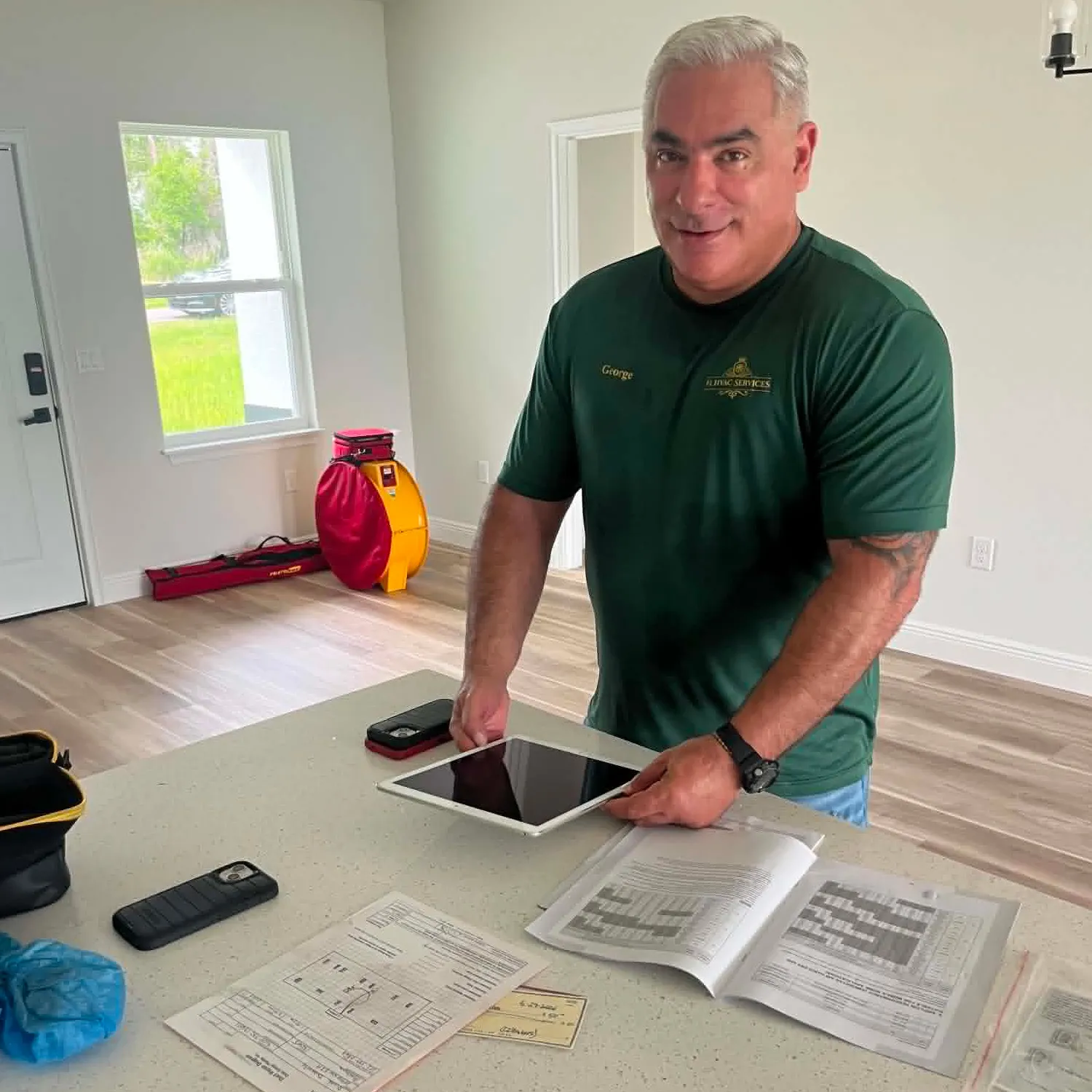
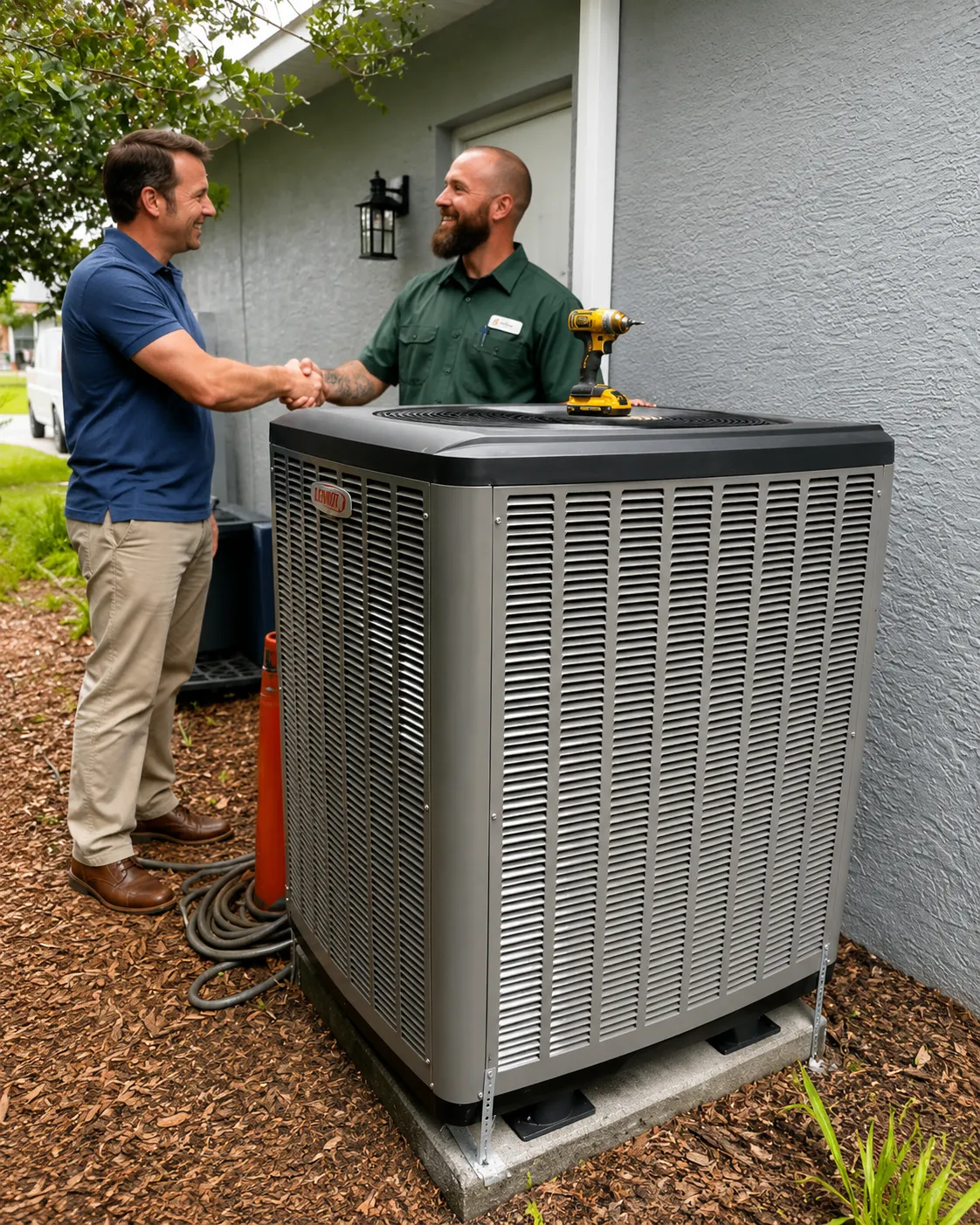
If your system is healthy, we tell you, and you stop worrying about it for the year. If something is off, we tell you exactly what's off, by how much, and what it'll take to correct it. The correction is almost never "replace the entire system." It's almost always a smaller, more targeted fix on the thing that's actually causing the problem.
When was the last time anyone actually measured your system against what it was designed to do?
| The visit | $59 tune-up | Our Performance Check |
|---|---|---|
| Time at your home | 20–40 minutes | About 2 hours |
| What gets checked | A few quick readings | Every measurable point: airflow, humidity removal, electrical, cooling performance, ductwork |
| Compared to the manufacturer's specs? | No | Yes, for your exact model |
| Your home | Not looked at | Walked room by room |
| What you get | "Looks good" or a replacement quote | Written findings you keep |
| Sales pressure | Built into the visit | None. The smallest correct fix comes first. |
| Price | $59 — then the upsell | Worth it or you don't pay |
Let's be plain about it.
The pattern goes like this. The technician arrives. He's been trained — sometimes pressured — to come back with one of two outcomes. Either he sells a repair that day, or he plants the seed for a replacement. He takes a few quick readings, but he never compares them to what your equipment was actually designed to do, because that takes time he doesn't have on a $59 visit. He looks at the unit. He notes the age. He listens to the homeowner's complaints if there are any. And then he either says "everything looks good" and leaves, or he says "your system is getting old, or it is out of warranty, regardless of the age, you really need to think about replacement," and hands over a quote.
The visit was never about your equipment. It was about whether today is the day you sign.
The most damaging version of this is when the homeowner does sign. We've seen perfectly healthy 4 and 5-year-old systems condemned by a technician who spent 20 to 40 minutes in the yard and never put a single instrument on the equipment. We've seen replacements installed at sizes far larger than the home actually needs — because "bigger is better" sounds reassuring to a homeowner who's been uncomfortable. It isn't. An oversized system short-cycles, never runs long enough to remove humidity, leaves the home feeling cold and clammy at the same time, wears its own components out faster, and pushes the electric bill higher than the unit it replaced, because bigger units have larger motors that use more electricity to run and cost more to purchase.
The homeowner spent about $10,000 or more to make their comfort problem permanent. And the only way to undo it is to replace the system again with one sized correctly for the home — which almost no homeowner is willing to do after just buying a new system.
That's the real cost of the cheap tune-up. It isn't the $59. It's the chain of events the $59 visit was designed to set in motion.
“The visit was never about your equipment. It was about whether today is the day you sign.”
Is there a replacement quote sitting on your kitchen counter right now?
This is the idea most homeowners never get told.
A cooling system that turns on and blows cold air can look like it's working while it's quietly failing. The unit cycles. The thermostat reads a temperature. The vents blow cold. From the outside, everything appears normal.
But "running" and "performing correctly" are not the same thing. A system can run while it's:
In every one of those cases, the unit is running. It's just running wrong. And running wrong has a cost — measured in higher bills, worse comfort, lower indoor air quality, and equipment that wears itself out years before it should.
The only way to know whether your system is running correctly is to measure it. Not look at it. Measure it. Every performance point compared to what the manufacturer says it should be doing. That comparison — actual performance vs. specified performance — is the entire game. Everything else is guessing.
We don't guess. We measure.
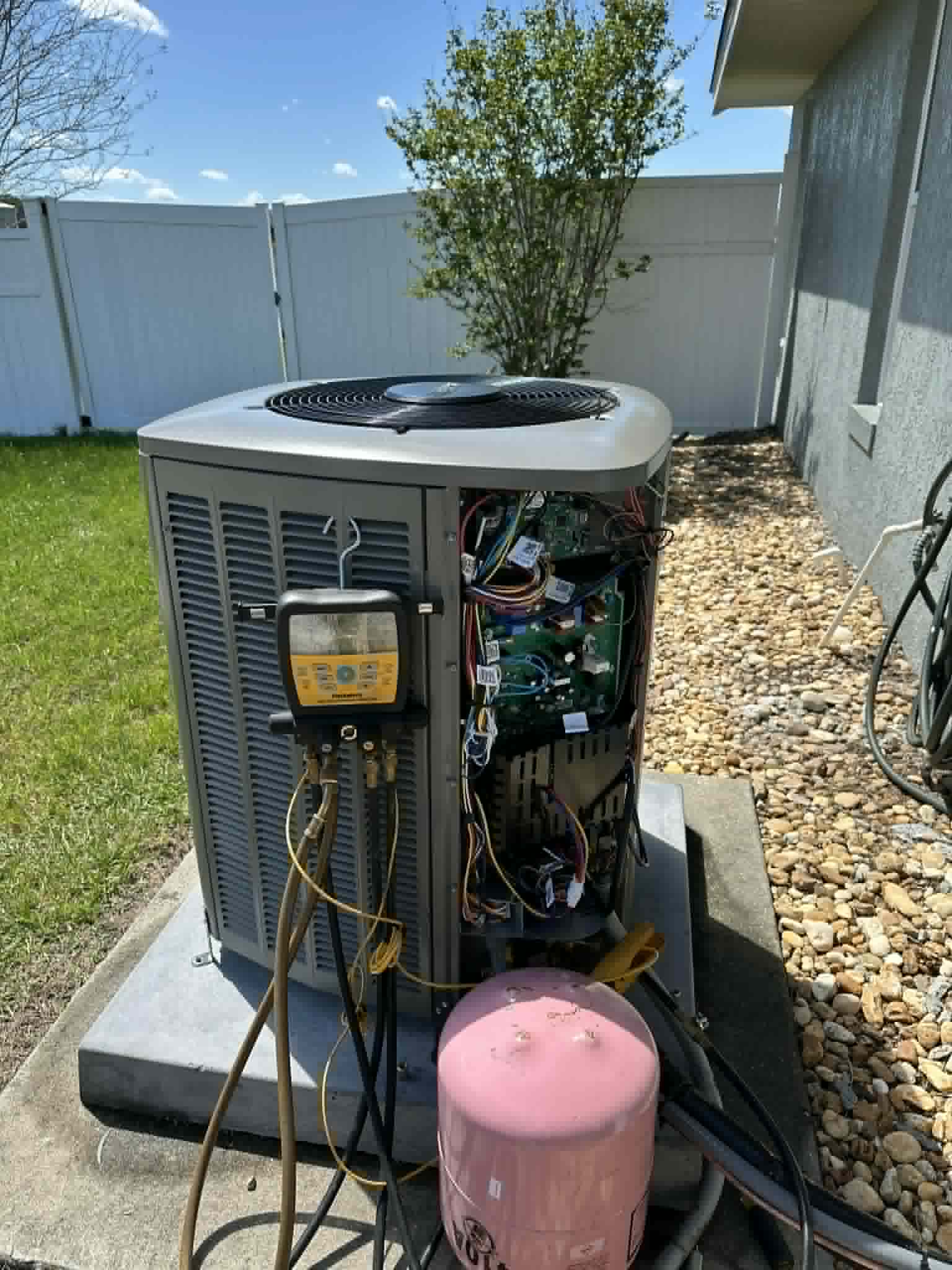
From the outside, every AC looks like it's working. The only way to know is to put instruments on it.
“Running and performing correctly are not the same thing.”
Your AC turns on and blows cold. But is it actually working the way it was built to?
If you've had two or three HVAC companies out and every one of them told you "we can't find anything wrong" — but you live in your house and you know something is wrong — this section is for you.
You're not crazy. The system isn't fine. The right tests weren't done.
Most companies take a few readings. The easy ones. If those come back in a normal-looking range, they stop. They tell you everything's good. They leave. But a few readings are a small fraction of what a cooling system actually has to do — and a system can pass those readings and fail half a dozen others that the technician never measured.
It's like a doctor checking your pulse and your temperature, finding both normal, and telling you you're perfectly healthy. Your pulse can be normal in a person with a serious underlying condition. Same with an HVAC system. A few easy readings are real readings, but they're a small slice of the picture.
We measure the rest. The readings that actually reveal the problems most companies miss. The humidity that won't come down. The room that won't cool. The bill that won't drop. Those problems have real, identifiable, measurable causes. They just don't show up on the two gauges most companies bother to check.
If you've been told "everything's fine" and you know it isn't, this is the visit you've been looking for.
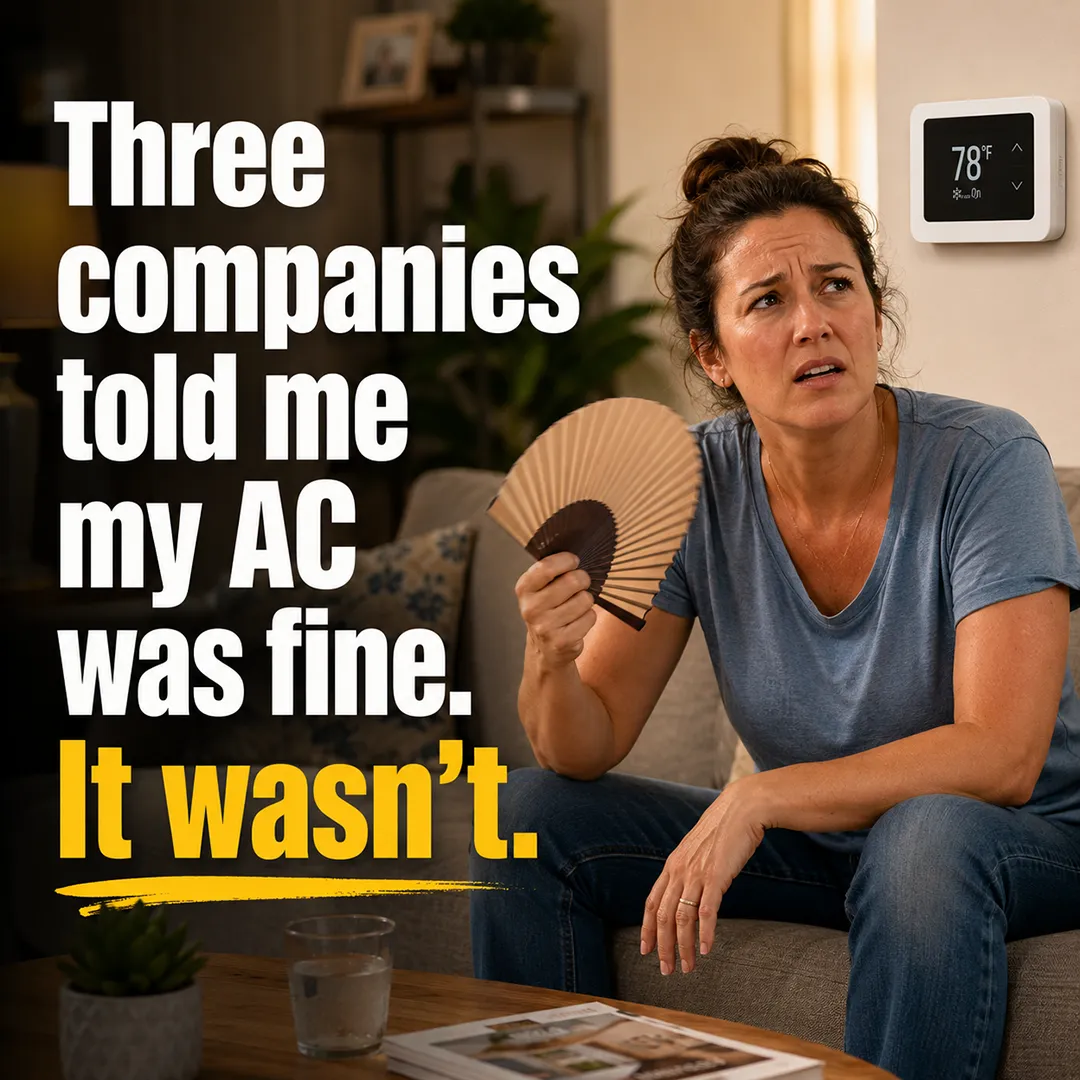
Sound familiar? You're not imagining it.
Been told “everything looks fine” — but your house says otherwise?
This is the scenario that frustrates homeowners the most. The maintenance company came out in April. Did the annual checkup. Everything was "good." Then, in July or even a month later, sometimes a week later — the fan motor burned out. Or the compressor failed. Or the system froze up on the hottest day of the year.
"How is this possible? They were just here."
The answer is simple. Nobody tested the system. Nobody measured anything. They looked at it, hosed it off, and left. A failing motor doesn't announce itself by looking dirty — it announces itself in the numbers. Pulling current it shouldn't be pulling. Running hotter than it should. Spinning slower than it should. Those things are invisible to the eye and obvious to an instrument. If nobody puts an instrument on it, nobody sees it coming.
A properly performed performance check catches failures before they happen. Motors starting to draw too much current. Capacitors reading weak but still functioning. Refrigerant charges slightly off in a way that's stressing the compressor. Airflow restricted in a way that's overheating components year-round. These are the failures that show up as "sudden" breakdowns in July. They are not sudden. They were detectable months earlier. They just weren't detected, because nobody was measuring.
When a system is verified to be running within the manufacturer's design specifications across every measurable point, surprise breakdowns become rare. Weak parts get caught months before they fail — not on the hottest day of July. The system runs the way the engineers built it to run, and equipment that runs that way is built to last well beyond its warranty, not give out the year after the warranty ends.
“They are not sudden. They were detectable months earlier.”
Would you rather find the weak part now — or on the hottest day of July?
Another version of this story: you call about a warm room, heavy humidity or a climbing bill. The tech listens — or doesn't — and the answer is always the same: "Your system is getting old. It's out of warranty. You really need a new unit."
The unit gets the blame. The unit almost never deserves it.
Most of the time, the unit isn't the problem. Ductwork that's too small or leaking, returns in the wrong places, insulation gaps, a home gaining heat faster than the system can remove it — any one of these makes a healthy unit look like it's failing. Swap the unit, and the new one inherits every one of those problems on day one.
The only way to find out what's actually causing a comfort problem is to measure the entire system against what it's supposed to be doing. When you do that, the real cause shows up in the numbers — and almost every time, the real cause is something that can be corrected without replacing the unit at all. The homeowner keeps their equipment, fixes the actual problem, and gets the comfort they were chasing for a fraction of what a replacement would have cost.
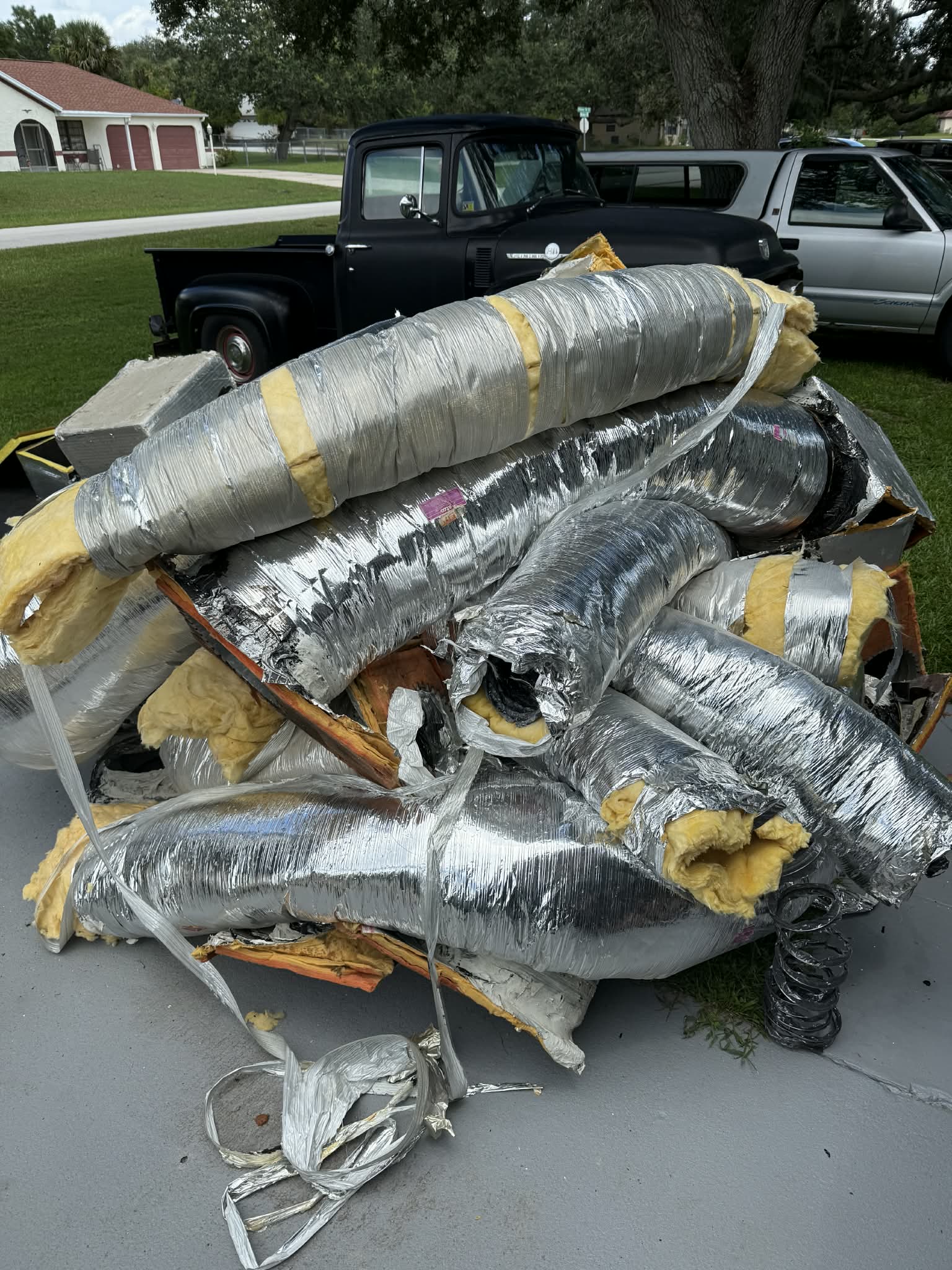
Damaged ductwork like this makes a healthy unit look like it's failing. A new unit doesn't fix it — it inherits it.
“The unit gets the blame. The unit almost never deserves it.”
Were you told you need a new system? Make sure it's really the unit before you spend $10,000.
Let's talk about cost head-on, because this is the question every visitor to this page eventually asks.
A real performance check costs more because the visit is the product. About two hours of a trained technician's time. Calibrated instruments. A real comparison of your system's performance against the manufacturer's published specifications. A written record of where your system stands. No pressure to buy anything else, ever, because we're not running the visit at a loss to set up a sale later.
The math actually favors the longer visit. The homeowner who falls into the $59 trap typically ends up with one of three outcomes:
A breakdown a few months later, because nothing was actually tested. Repair cost: $250 to $2,000 or more.
A replacement they didn't need, because the technician's playbook is to recommend one. Cost: $10,000 to $15,000 or more.
An oversized replacement that makes the comfort problem worse and can't be fixed without replacing it again. Cost: the original $12,000, plus years of inflated electric bills, plus eventually another full replacement.
A real performance check costs a fraction of any of those. And if your system is actually fine, you walk away knowing it — with numbers, not opinions, backing the answer up. That's worth more than $59 worth of guessing.
Or one AC Performance Check. Worth it or you don't pay.
You should know who's actually showing up at your home.
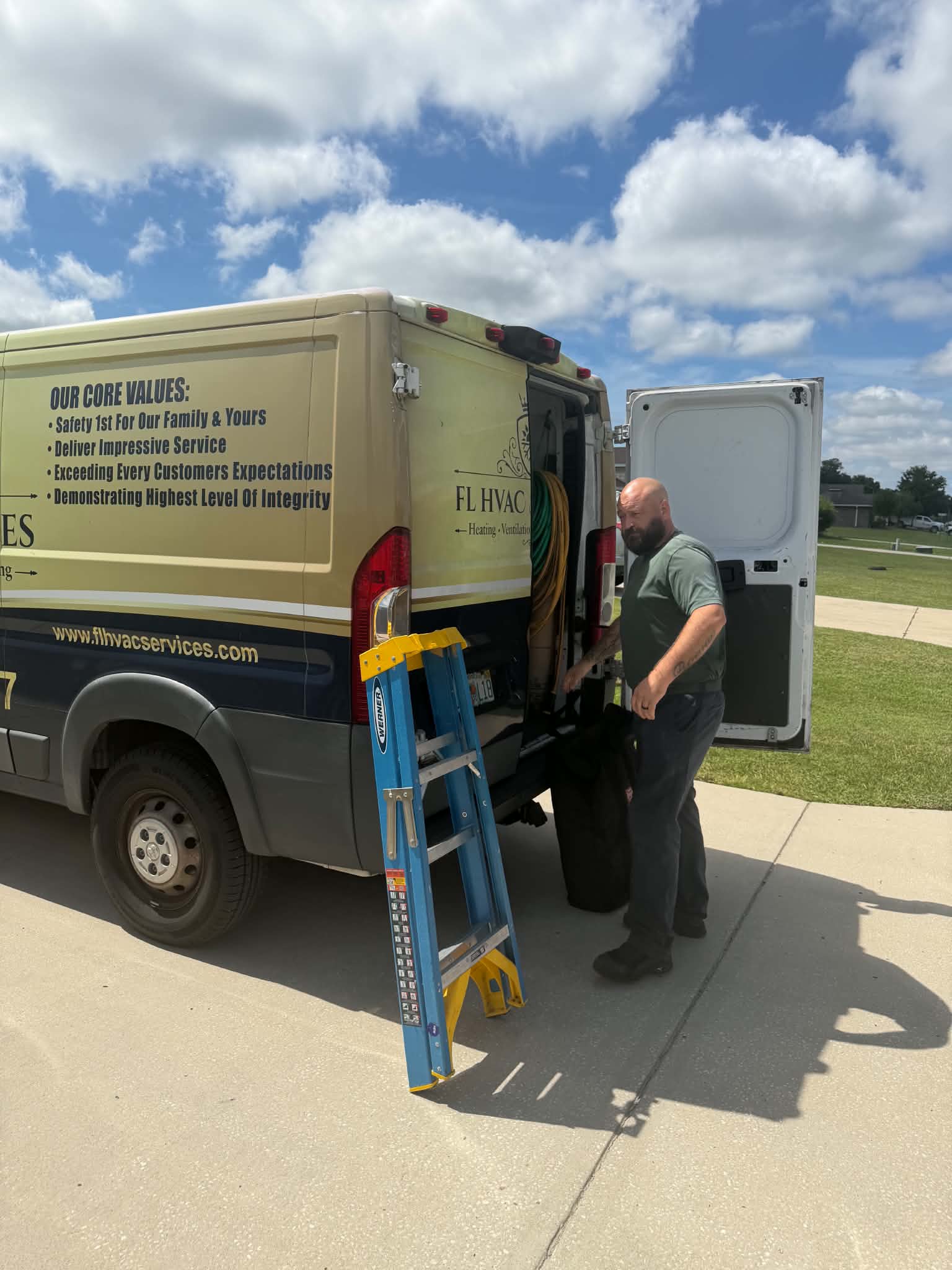
We're a small, family-run Florida HVAC team. The same trained technicians who measure your system are the ones standing on your porch — not a rotating crew of commission-driven salespeople. We carry the licenses and building-science training required to actually diagnose a comfort problem, not just guess at one.
Required. The baseline. License #CAC1819318.
Building-science credentials, not generic HVAC ones. This is the training that teaches a technician to look at the home and the equipment together as one performance system — which is the entire reason a real performance check is possible. Most HVAC companies don't carry it.
Qualified to formally identify and document mold contamination — which in Florida often shows up first inside the HVAC system itself, where humidity and condensation create conditions for it to grow. License #MRSA5365.
Qualified to correct contamination once identified. Two separate state licenses, both held in-house. License #MRSR5401.




Online or over the phone. We confirm in writing.
We're on time or we call ahead.
Walk-through of the home, instruments on the equipment, every measurement compared to manufacturer specifications, written record of findings.
If your system is healthy, we say so. If something is off, we explain exactly what, by how much, what it's costing you, and what your options are. The smallest correct fix is always the first option we recommend — not the most expensive one.
No pressure on repairs or replacements. Ever. No upsell scripts. You get the truth and a written record of it, and you make the call.
Serving residential homeowners. Florida HVAC: #CAC1819318. Department Of Energy – Certified Energy Skilled Technicians. Mold Assessor: #MRSA5365 & Mold Remediation: #MRSR5401