

★ 4.9 on Google · 150+ Reviews · Best of 2026 · BPI Certified
Plenty of companies offer indoor air quality testing. Lab tests, mold assessors, air quality monitors. They hand you a report full of numbers and a list of products to buy: a better filter, a UV light, an air purifier, more fresh air.
Then the problem comes back. Testing tells you what’s in your air. It doesn’t tell you why it’s there, or how to stop it.
We do both. We test your air, find the cause, fix it at the source and test again to prove it worked.
Already had your air tested? Bring us your results. We’ll show you what’s causing them.
Real reviews from real customers, straight from Google.
Your air conditioner is the only thing in your house that pulls in, conditions and sends back out all of the air, all day long. Nearly every breath your family takes inside has been through it.
When it’s designed and installed correctly, it traps what’s floating in the air, controls the moisture and keeps the whole house clean and comfortable. When it isn’t, it does the opposite: it spreads dust, allergens, chemical pollutants and mold spores to every room.
That’s why real indoor air quality solutions aren’t a gadget you add. They come from an AC system that’s designed, installed and set up to clean your air.
Fix the system, and you fix the air.
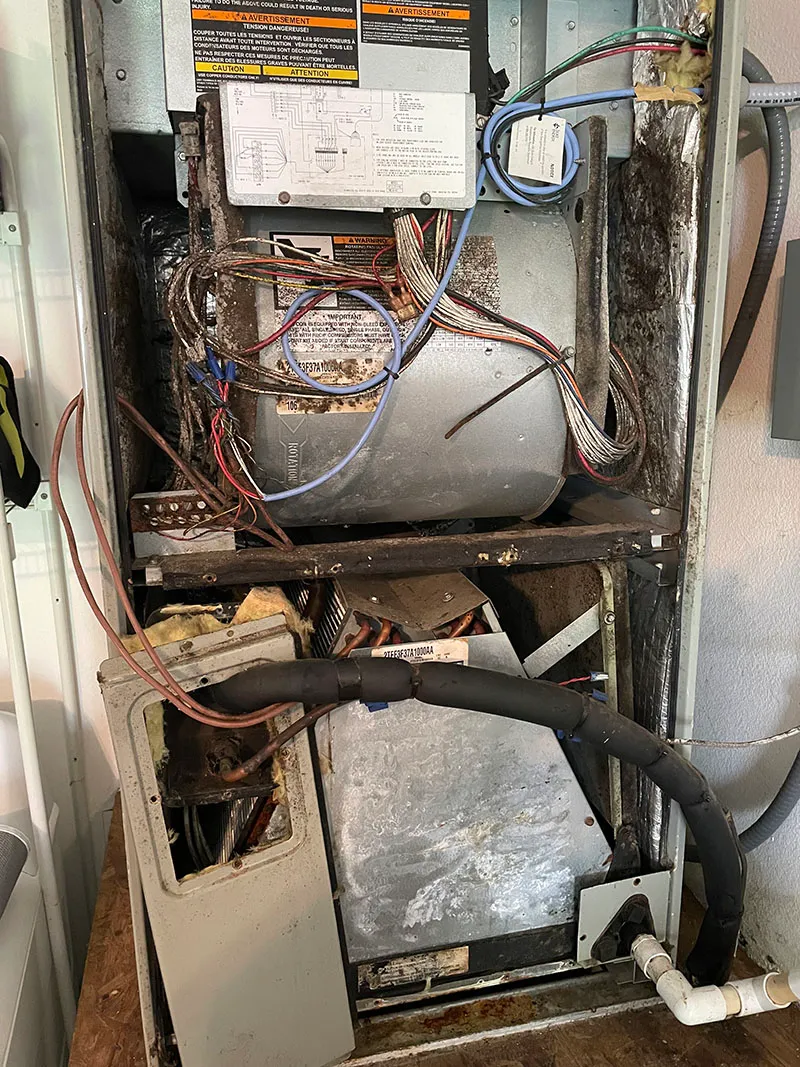
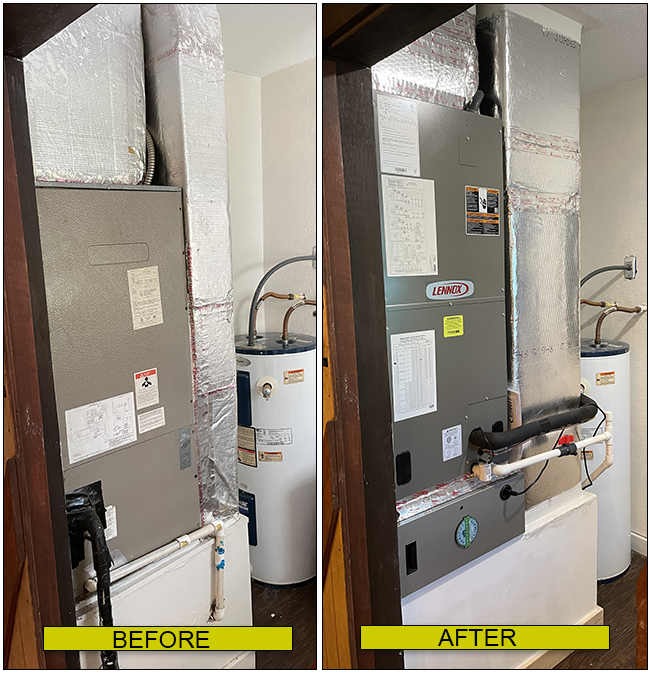
Every bit of air in this home passed over this air handler before reaching the family.
Poor indoor air quality doesn’t always look like anything. More often, you feel it. Watch for:
Some people call it sick house syndrome. Whatever the name, these are symptoms. The cause is almost always in how air moves through your home and your AC system, and that’s what we find.
When the air tests poorly, the usual answer is to add a product: a thicker filter, a UV light, a whole house air purifier. Each one treats a symptom. None of them fixes why the air got dirty in the first place.
Worse, adding a product to a system that wasn’t designed for it can create a new problem. A filter that’s too restrictive chokes the airflow. Less air moving through the system means less moisture removed, higher humidity, and more mold and chemical pollutants in the air. One problem solved, another created.
Filters and UV lights have their place. We use the right ones, but only as part of a system that’s designed to work with them.
Watch: Do Air Filters Really Work?
Tested before and after, with the numbers, and the people, to prove it.
Alex’s Before and After Readings
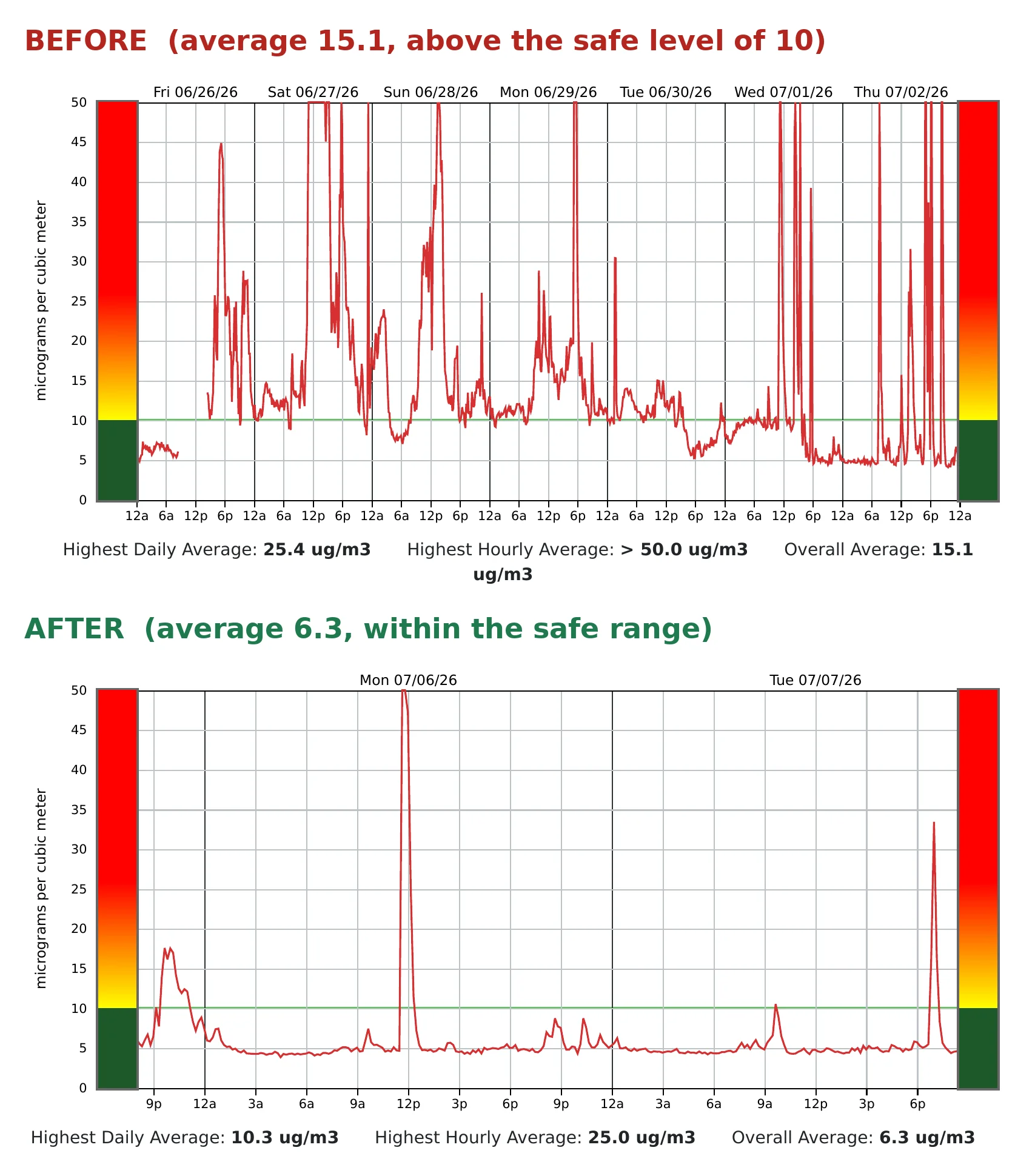
The problem: Airborne particles (dust and allergens) in Alex’s home averaged 15.1, above the recommended level of 10, and the house averaged 78°.
What we did: We replaced his system with one designed for his home, with the correct filtration and humidity control, and monitored the air before and after with our AirAdvice monitor.
The result: Particles dropped 58% to an average of 6.3, within the recommended range. The house now averages about 73° with humidity around 44%, and formaldehyde, chemical pollutants (VOCs) and carbon monoxide are all within the recommended range.
Averages from AirAdvice monitoring. Recommended levels are those listed in the AirAdvice report, based on EPA and American Lung Association guidance.
Watch Kristen’s Story
The problem: Kristen was getting two allergy shots a week from her doctor.
What we did: We found mold in her AC system, the system that was moving the air through her whole home, and fixed it at the source.
The result: Kristen went from two allergy shots a week to none. And her husband, who thought he felt fine, noticed he coughs about 90% less in the house.
This is general information, not medical advice. If someone in your home has symptoms, talk to your doctor.
One of the most common recommendations for poor indoor air quality is to bring in more fresh air from outside. In a dry climate, that can help. In Florida, outside air is hot and loaded with moisture for most of the year.
Bring more of it into your home without controlling that moisture, and your indoor humidity goes up. High humidity feeds mold, and chemical pollutants like formaldehyde are released faster in warm, humid air.
In Florida, fresh air has to be brought in and dried the right way, as part of a system designed for your home. Otherwise you’re trading one problem for another.
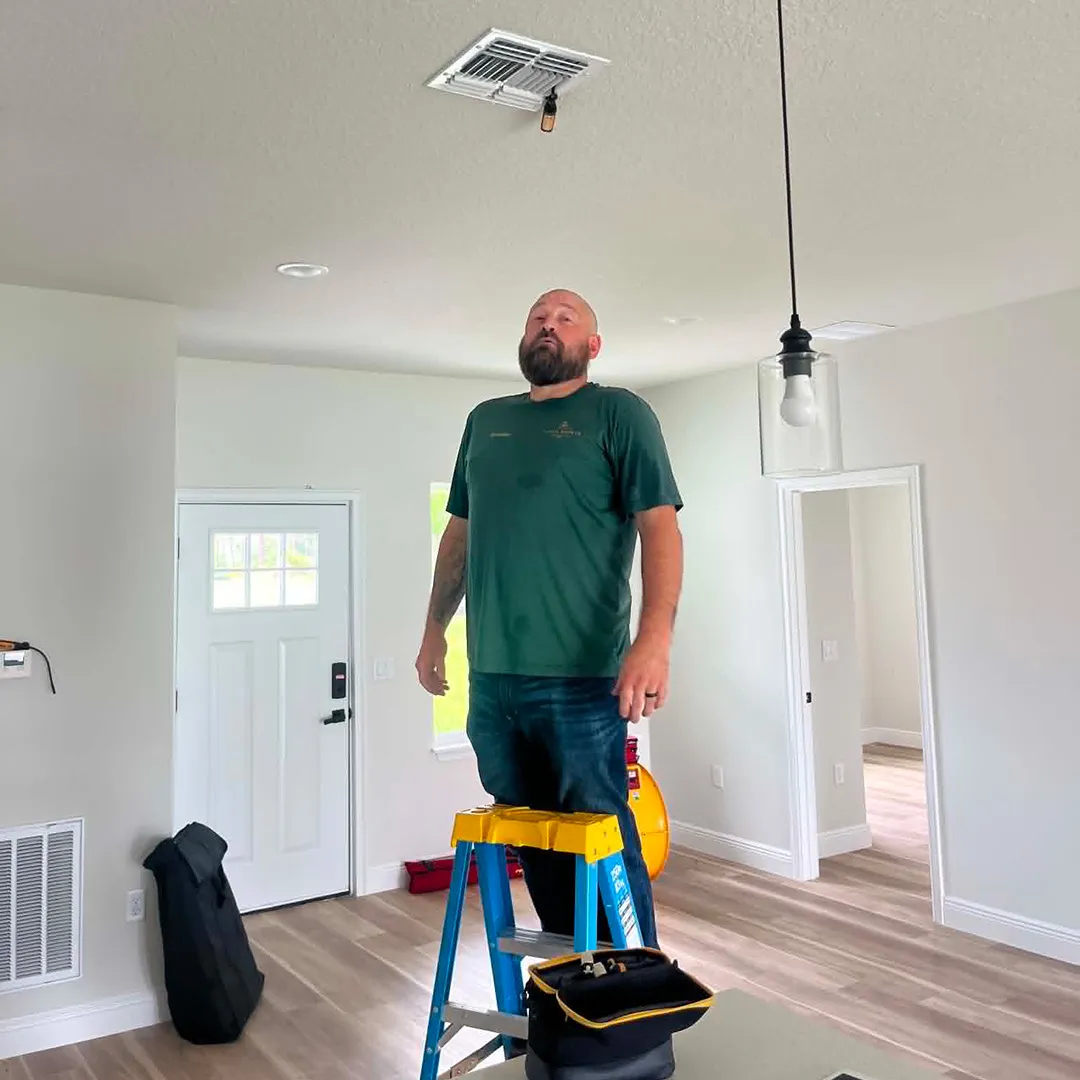
Anyone can say your air is better. We test it, fix it and test it again, so you can see the difference in the numbers.
We don’t just say your air is cleaner. We prove it.
Indoor air quality isn’t one fix. It’s every part of your system doing its job.
Dry air is clean air. Humidity held between 50–55% keeps mold and chemical pollutants in check.
See how we control humidity →A moldy air handler spreads spores to every room. We find why it grows and stop it at the source.
Learn about mold in AC systems →A system sized and designed for your home moves, filters and conditions the air the way it should.
See our AC replacement approach →We measure how your system is really performing and give you written findings.
See how we measure performance →Start with the basics: change your filter on schedule, run your bathroom and kitchen exhaust fans, and keep humidity between about 40% and 55%. If the problem keeps coming back, the cause is usually in your AC system: how it was designed, sized and installed, and how air moves through it. That’s what we find and fix.
Testing measures what’s in your air. A solution fixes why it’s there. We do both, then test again to prove the fix worked.
It depends on the size of your home and what we’re testing for. Call us and we’ll give you the price before we start.
They can remove some particles, but they don’t fix the cause. If your AC system is spreading dust, moisture or mold, a purifier is fighting a problem that keeps coming back. Added to a system that wasn’t designed for it, it can also reduce airflow and raise humidity.
Limit the sources you can, like harsh cleaners, paints and new furniture, and keep humidity under control, since chemical pollutants are released faster in warm, humid air. Then make sure your AC system is filtering and conditioning the air correctly.
Usually moisture and mold, often inside the AC system or ductwork. It’s a sign something in the design, installation or airflow isn’t right, and it should be checked.
Not without controlling its moisture. In Florida, uncontrolled outside air raises indoor humidity, which feeds mold and chemical pollutants. Fresh air has to be brought in and dried correctly, as part of a system designed for your home.
Yes. After we fix it, we retest. If your air doesn’t test within the recommended range, we keep working until it does, in writing.
Ocala, The Villages and the surrounding areas, including Marion, Sumter, Lake, Citrus, Alachua and Orange Counties and the Orlando area.
What we find inside the AC, and what homeowners notice once the air is clean.
September 29, 2026
Think your HVAC system was installed wrong? Learn the top signs of poor HVAC installation in Florida—from mold risks to humidity issues—and how to fix them the right way.
September 29, 2026
Avoid these top 10 HVAC mistakes Florida homeowners make. How to design for humidity, airflow, and long-term comfort with expert tips and proven strategies.
September 29, 2026
Discover the truth about HVAC energy efficiency in Florida. Learn why proper system design matters more than SEER ratings and how to really lower your electric bills.