


★ Best of 2026 · 1-Year Money-Back Guarantee · FL Licensed Mold Assessor
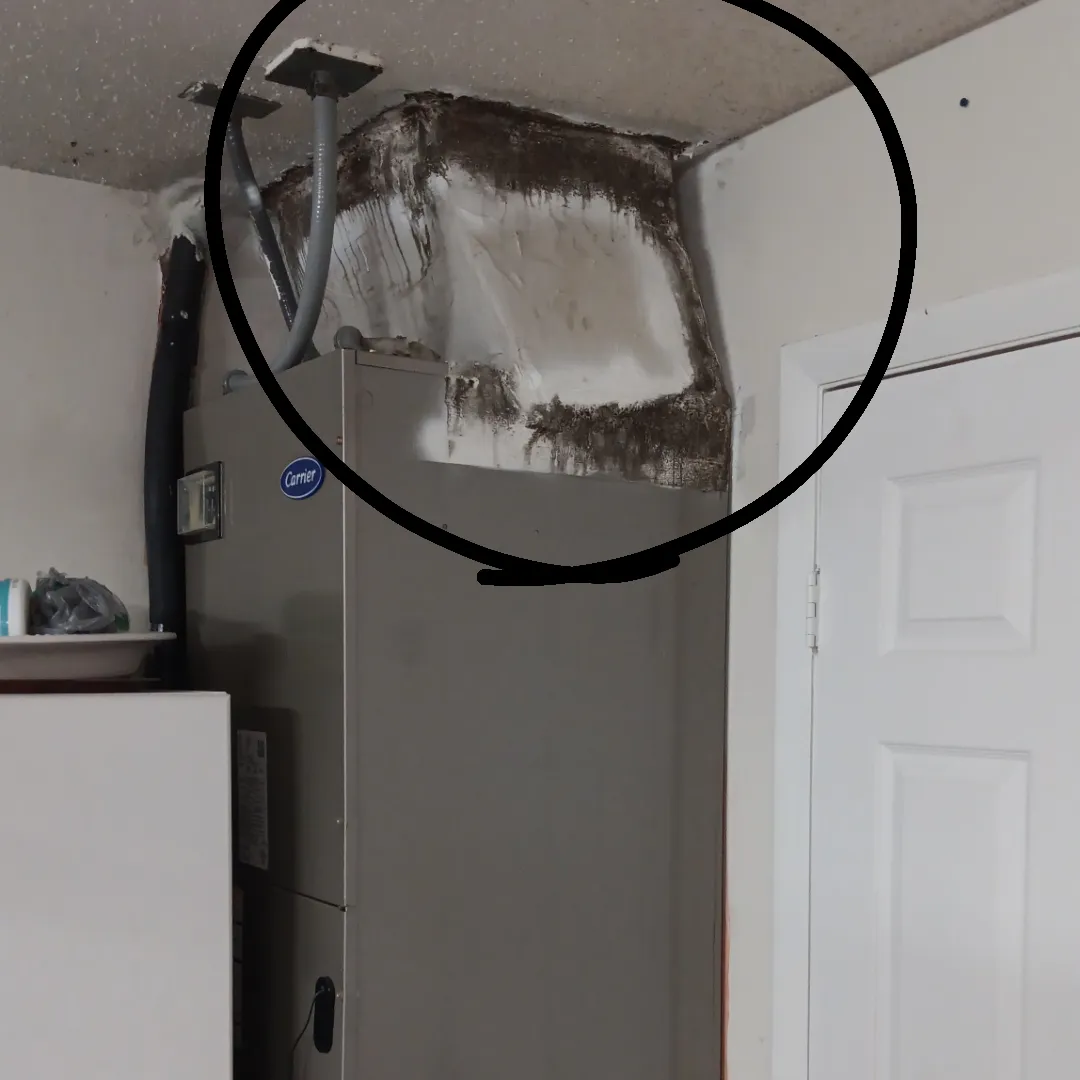
“It smells musty every time the AC turns on.”
That smell usually comes from mold and bacteria growing on the wet parts inside your system. When the blower starts, it pushes that air straight into every room.
“I feel better as soon as I leave the house.”
Sneezing, stuffiness or a cough that eases up when you’re away often points to something in the air at home. Your AC moves that air through the whole house, every time it runs.
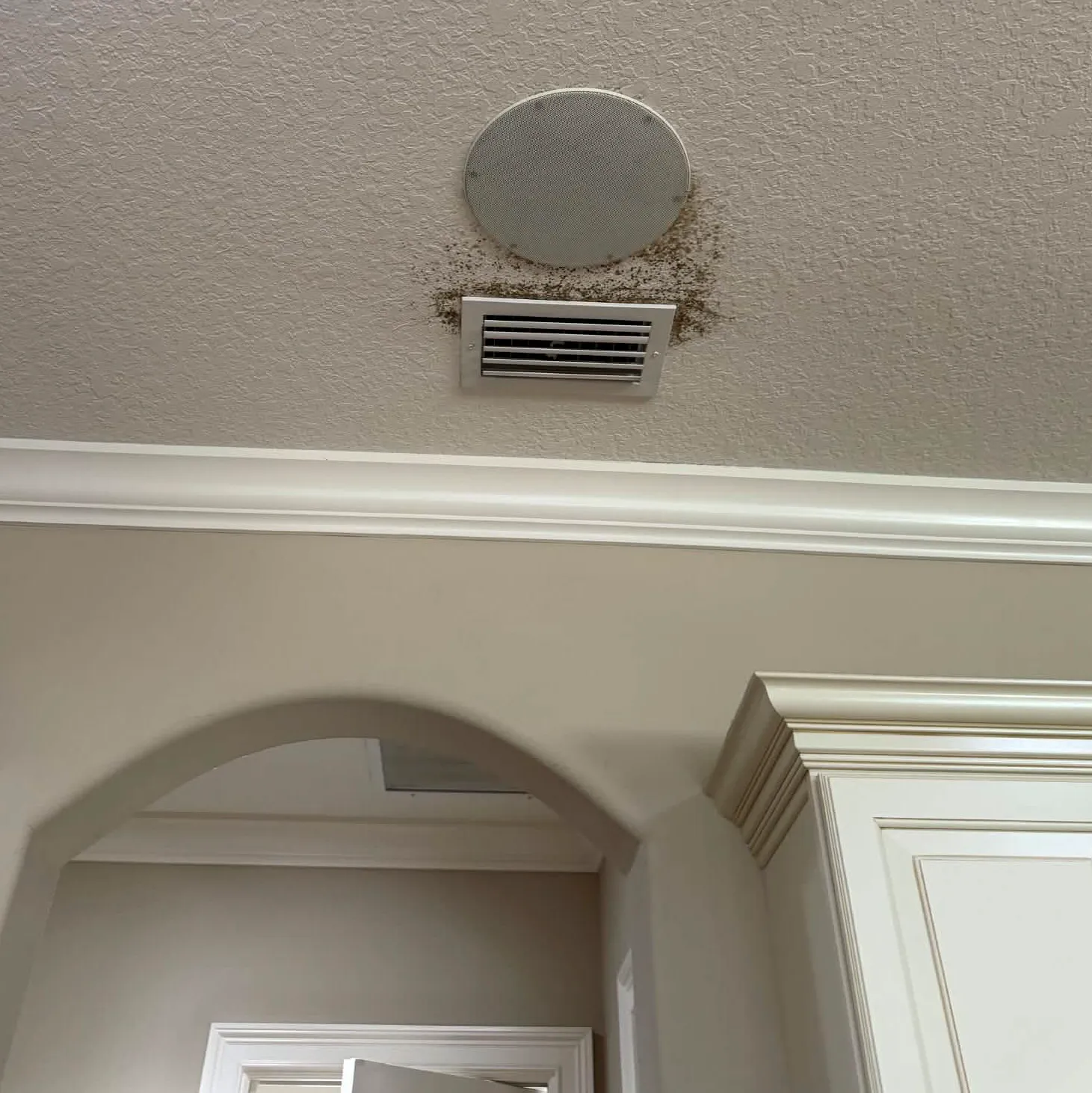
Dark specks around vents can be mold, or dust sticking to cold, damp surfaces. Either way, moisture is sitting where it shouldn’t, and only a lab test can tell you for sure what it is.
“My house feels sticky, even with the AC on.”
Your AC should be pulling moisture out of the air. If the house feels muggy even when it’s cool, the system isn’t drying the air, and that extra moisture feeds mold.
“The drain line keeps clogging.”
Drain clogs often come from slime and mold growing where the water collects. Standing water inside the cabinet gives mold a permanent home.
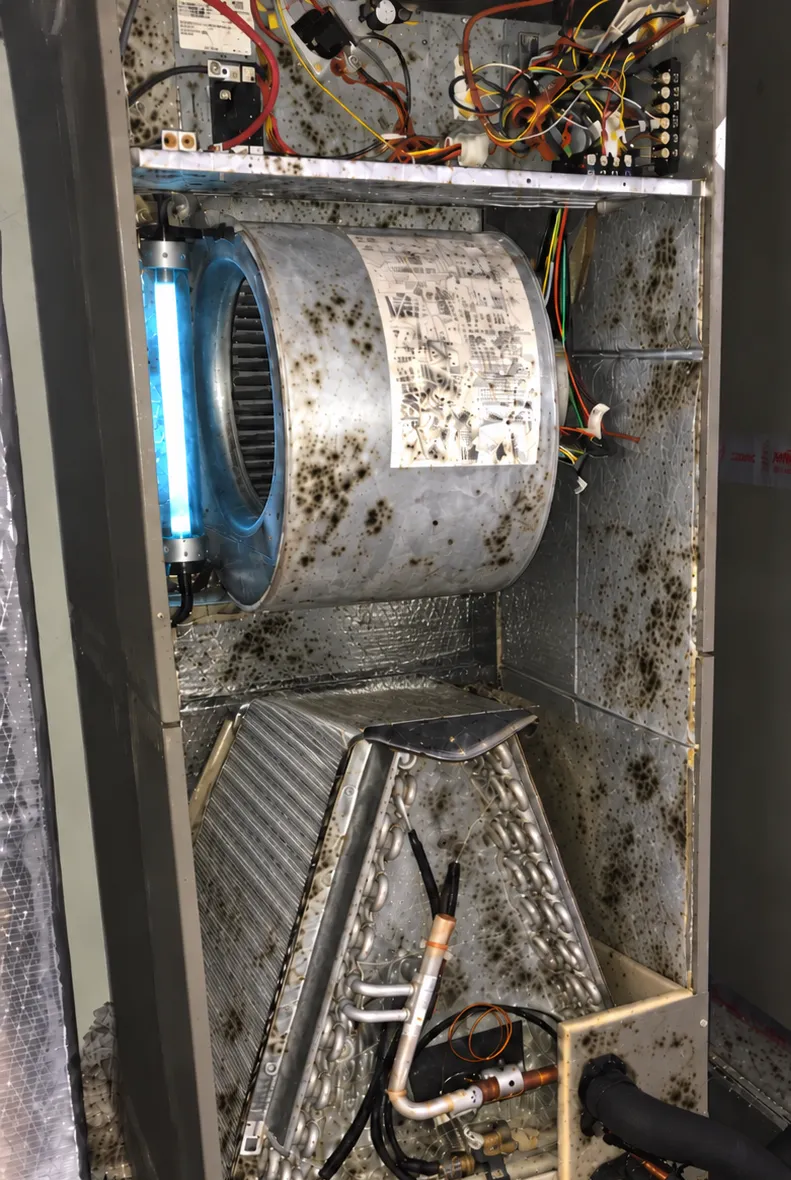
If you can see it, it’s already established. What you can see is usually only part of what’s there, and it’s in the air your family breathes.
If you’re noticing any of these, the problem usually won’t fix itself. Every day the system runs, it keeps growing.
Every time your air conditioner runs, it pulls moisture out of your home’s air. That moisture collects on a cold coil inside the indoor part of your system, called the air handler, and is supposed to drain away.
Now think about what’s inside that cabinet: it’s dark, it’s cold, it’s wet, and it catches dust, which mold feeds on. Add Florida’s humidity and you have everything mold needs to grow. When a system isn’t installed or set up correctly, the air handler stops being a machine that dries your air and starts being a machine that grows mold, then pushes it through your ductwork into every room.
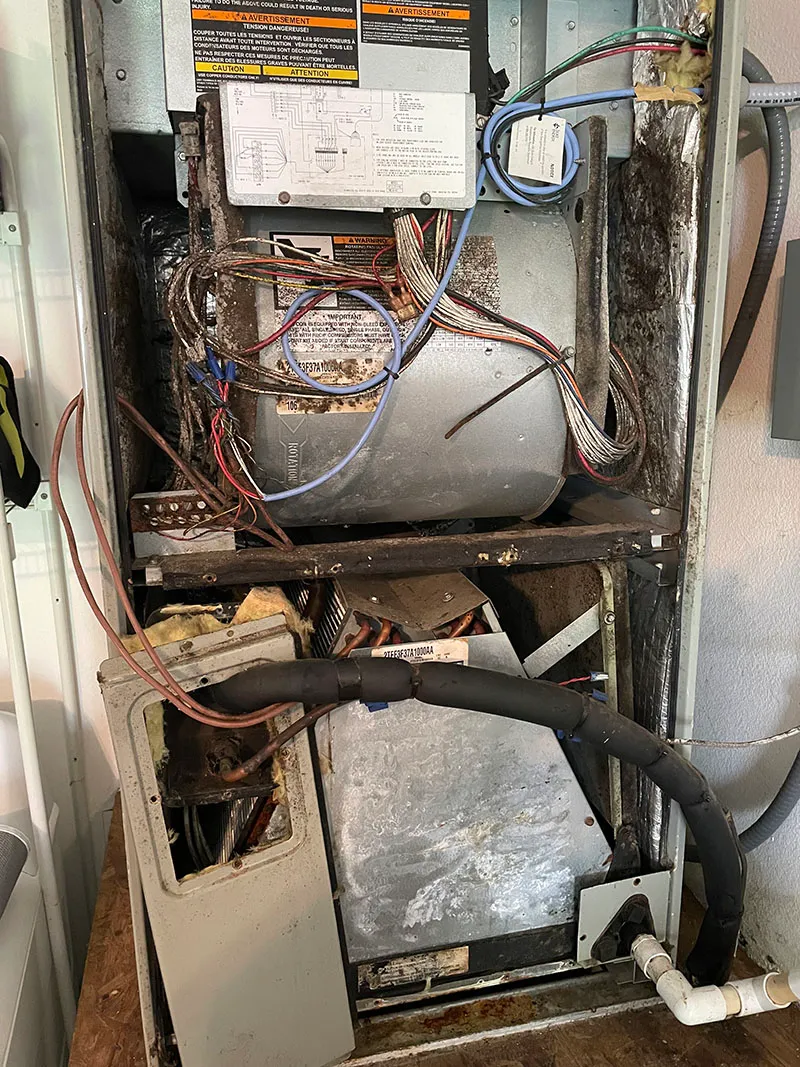
Open up the air handlers in homes across Ocala and The Villages and you’ll find mold in a lot of them. Because it’s so common, many homeowners are told it’s just part of living in Florida.
It isn’t. A correctly installed and correctly running AC system should never grow mold inside the air handler. When it does, something is wrong: with how the system was installed, how it’s sized, how air moves through it, or how moisture leaves it.
Mold is the symptom. The system is the cause.
These are the molds that show up most often in lab reports from the AC systems we test, including the real report on this page. Here’s what each one is and how it can affect the people breathing it every day.
What it is: One of the most common molds found indoors. It’s one of the dark, “black mold” types that grows on cold, wet coils, vents and duct surfaces.
Common symptoms: Sneezing, stuffy or runny nose, itchy or watery eyes, coughing, wheezing and skin irritation.
Long-term concerns: It’s one of the top mold triggers for allergies and asthma. Breathing it every day can keep symptoms going all year and make asthma harder to control.
What it is: A very common mold with many species. Its spores are tiny enough to travel deep into the lungs.
Common symptoms: Coughing, wheezing, shortness of breath, chest tightness and congestion.
Long-term concerns: It can make asthma worse. In people with asthma or cystic fibrosis, it can cause a serious allergic lung condition. In people with weakened immune systems, from chemotherapy, a transplant or certain medications, it can cause serious lung infections. Some Aspergillus species also produce aflatoxins, toxins linked to cancer, so long-term exposure may raise the risk for some people.
What it is: The same family of mold penicillin comes from. Growing in your AC, it’s a different story: it spreads fast in damp spots and travels easily through the air.
Common symptoms: Sneezing, congestion, coughing, itchy eyes, sinus irritation and asthma flare-ups.
Long-term concerns: Breathing it over and over is linked to asthma, ongoing sinus problems and, in some people, inflammation of the lungs from repeated exposure. Some Penicillium species produce ochratoxin A, a toxin considered a possible cause of cancer, one more reason not to live with it long-term.
What it is: A dark mold that grows on damp surfaces and often shows up alongside other molds in AC systems and ductwork.
Common symptoms: Stuffy nose, sinus pressure, sneezing, coughing and wheezing.
Long-term concerns: A known trigger for allergies and asthma, and a leading cause of allergic fungal sinusitis, a stubborn sinus problem that keeps coming back. In rare cases, it can cause infections in people with weakened immune systems.
Who’s at higher risk: Babies and children, older adults, anyone with asthma, allergies or COPD, and anyone with a weakened immune system.
This is general information, not medical advice. If someone in your home has symptoms, talk to your doctor and tell them mold was found in your AC.
Everybody’s body reacts to mold differently. Some people are very sensitive and get sick fast. Others react slowly, over months or years. And many people have symptoms they don’t recognize, like a cough or stuffy nose they’ve lived with so long they think it’s normal.
That’s why it’s common for one family member to feel sick while everyone else says they’re fine. The family starts looking for other causes, and nobody thinks to look at the AC. Just because others in the home aren’t getting sick doesn’t mean the mold is harmless.
Watch Kristen’s Story
If you’ve never lived with clean air coming out of your AC, you may not know how much better you can feel.
Think of it like a good doctor. You don’t just want something for the symptoms; you want to know what’s causing them, so they don’t come back.
Cleaning alone only removes what’s there today. Correcting the cause is what keeps it from coming back.
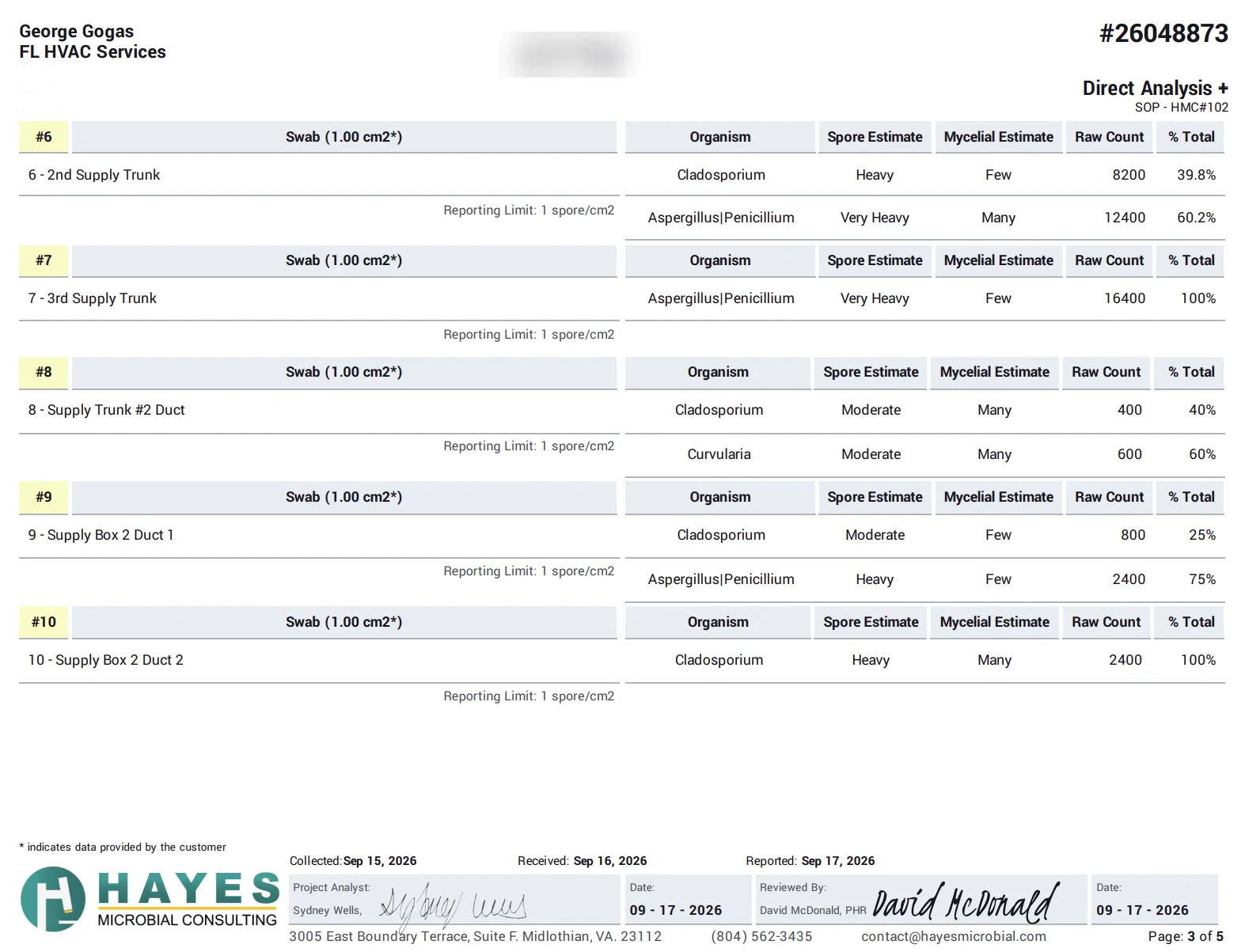
A real lab report from a home we tested. The lab confirmed mold growing inside the home's ductwork, not just the air handler.
Mold doesn’t always stay in the air handler. Once it’s growing there, your system can blow it into the ductwork, where it settles and grows too. That’s why we check both. Ductwork also plays a role in how mold starts and grows in an AC system in the first place.
Mold can only be cleaned off non-porous surfaces like metal. That’s why we can clean the inside of your air handler. Flex duct, duct board and drywall (sometimes used to build return air boxes and AC closets) are porous. Mold grows down into them, not just on top, so it can’t be cleaned out. Whatever is left grows right back and keeps sending spores through your home.
If the lab confirms mold in porous ductwork, that ductwork has to be replaced, not cleaned.
When you hire us to stop the mold in your AC, solving it is what you’re paying for, and it’s what you get. We take integrity, honor and pride in solving problems, not covering them up.
When you approve the full plan we recommend to correct the cause, we guarantee your mold problem will be solved. Dozens of homeowners we’ve worked with are proof, including the customers in the videos on this page.
The proof is in the results. And we back it up.
BusinessRate named FL HVAC Services a Best of 2026 Air Conditioning Contractor in Ocala, based on real Google reviews from homeowners like you. We earned it the same way we do every job: showing up, finding the real problem, and fixing it right. Thank you to every homeowner who trusted us.
Mold in your AC, whether it’s in the air handler or has spread into the ductwork, almost always comes back to moisture that isn’t being handled the way it should be. Common reasons:
A system can have more than one of these at once, and they aren’t always visible just by looking. That’s why we measure instead of guess.
One of the most common “fixes” homeowners are sold is a UV light in the air handler. It sounds like it should work: UV light kills mold, so problem solved.
But a UV light is meant to help with mold spores traveling through the air, spores coming in from outdoors or from other parts of the house. It was never meant to fix an AC system that is creating the conditions for mold to grow. Some UV lights are aimed right at the coil, but it doesn’t matter where the light is mounted. If the system isn’t set up correctly, it produces far more mold than any UV light can keep up with. The light may kill some of it, but not nearly enough.
We see this in the field regularly. When we lab-test air handlers that already have UV lights, the results still come back positive for mold, and in some cases the mold is growing right around the light itself.
A UV light treats what’s floating by. It doesn’t fix why your AC is wet and growing mold. Only correcting the system does.
Real reviews from real customers, straight from Google.
Most homeowners have to call one company about their AC and a different one about mold. We understand both.
Because we understand both the mold and the machine that’s growing it, we can do what a mold-only company or an AC-only company can’t do alone: stop the growth at the source.
It’s common, but it’s not normal. A correctly installed and correctly running system should not grow mold inside the air handler. When it does, something in the system needs to be corrected.
Dark growth inside an air handler means moisture is staying where it shouldn’t, usually from sizing, airflow, drainage or air-leak problems. Only a lab test can confirm it’s mold and tell you exactly what type of mold it is.
A musty smell usually means moisture and mold are building up inside the system. The smell is your first warning sign; a lab test confirms it.
No. A UV light can help with some spores in the air, but it doesn’t stop a system that isn’t set up correctly from growing mold. We often lab-test systems with UV lights and still find mold.
Cleaning removes what’s there today. If the cause isn’t corrected, the mold comes back. Prevention means cleaning it and fixing why it grew.
Mold in your home’s air can aggravate allergies and asthma and make your home feel stuffy and uncomfortable. If you’re having health symptoms, talk to your doctor; we’ll find and fix the source in your system.
It can. The air handler pushes air through your ducts to every room, so a mold problem in the unit can travel.
Not always. Many systems can be corrected. If replacement truly makes more sense, we’ll tell you why and show you the numbers.
The molds we find most often in lab reports from AC systems are Cladosporium, Aspergillus, Penicillium and Curvularia. Cladosporium and Curvularia are dark molds, often what people call black mold. All four are known triggers for allergies and asthma.
Common symptoms include sneezing, a stuffy or runny nose, itchy or watery eyes, coughing, wheezing, sinus problems and asthma flare-ups, often worse at home and better when you’re away. Many people have symptoms they don’t recognize because they’ve lived with them so long.
Everybody’s body reacts to mold differently. Some people are very sensitive and react quickly, while others react slowly or have mild symptoms they think are normal. One person being sick while others feel fine doesn’t mean the mold is harmless.
The only way to confirm mold is with a lab test. We take a sample from your air handler or ductwork and send it to an independent lab, which reports what’s growing and how much.
No. Mold can only be cleaned off non-porous surfaces like metal. Flex duct, duct board and drywall are porous, so mold grows into them and comes back after cleaning. If the lab confirms mold in porous ductwork, it has to be replaced.
It can be a risk. Some Aspergillus species produce aflatoxins, toxins linked to cancer, and some Penicillium species produce ochratoxin A, a toxin considered a possible cause of cancer. Long-term exposure may raise the risk for some people, one more reason not to live with mold in your AC. If you’re concerned, talk to your doctor.
Yes. When you approve the full plan we recommend, we guarantee your mold problem will be solved. If mold comes back within one year anywhere we corrected or replaced it, in the air handler or the ductwork, you get your money back for the correction work. Lab testing and inspection fees aren’t included. Your part is keeping the system properly maintained and following the mold prevention maintenance we lay out for your home. Every guarantee is given in writing.
Ocala, The Villages and the surrounding areas, including Marion, Sumter, Lake, Citrus, Alachua and Orange Counties and the Orlando area.

May 11, 2025
Think your HVAC system was installed wrong? Learn the top signs of poor HVAC installation in Florida—from mold risks to humidity issues—and how to fix them the right way.

May 12, 2025
Avoid these top 10 HVAC mistakes Florida homeowners make. How to design for humidity, airflow, and long-term comfort with expert tips and proven strategies.

May 12, 2025
Discover the truth about HVAC energy efficiency in Florida. Learn why proper system design matters more than SEER ratings and how to really lower your electric bills.
Your air conditioner should make your home cleaner and drier, not the opposite. Call FL HVAC Services at 352-358-5537 or schedule an AC Mold Prevention Check, and we’ll find out why it’s happening and fix it at the source.