
★ 4.9 on Google · 150+ Reviews · Best of 2026 · BPI Certified
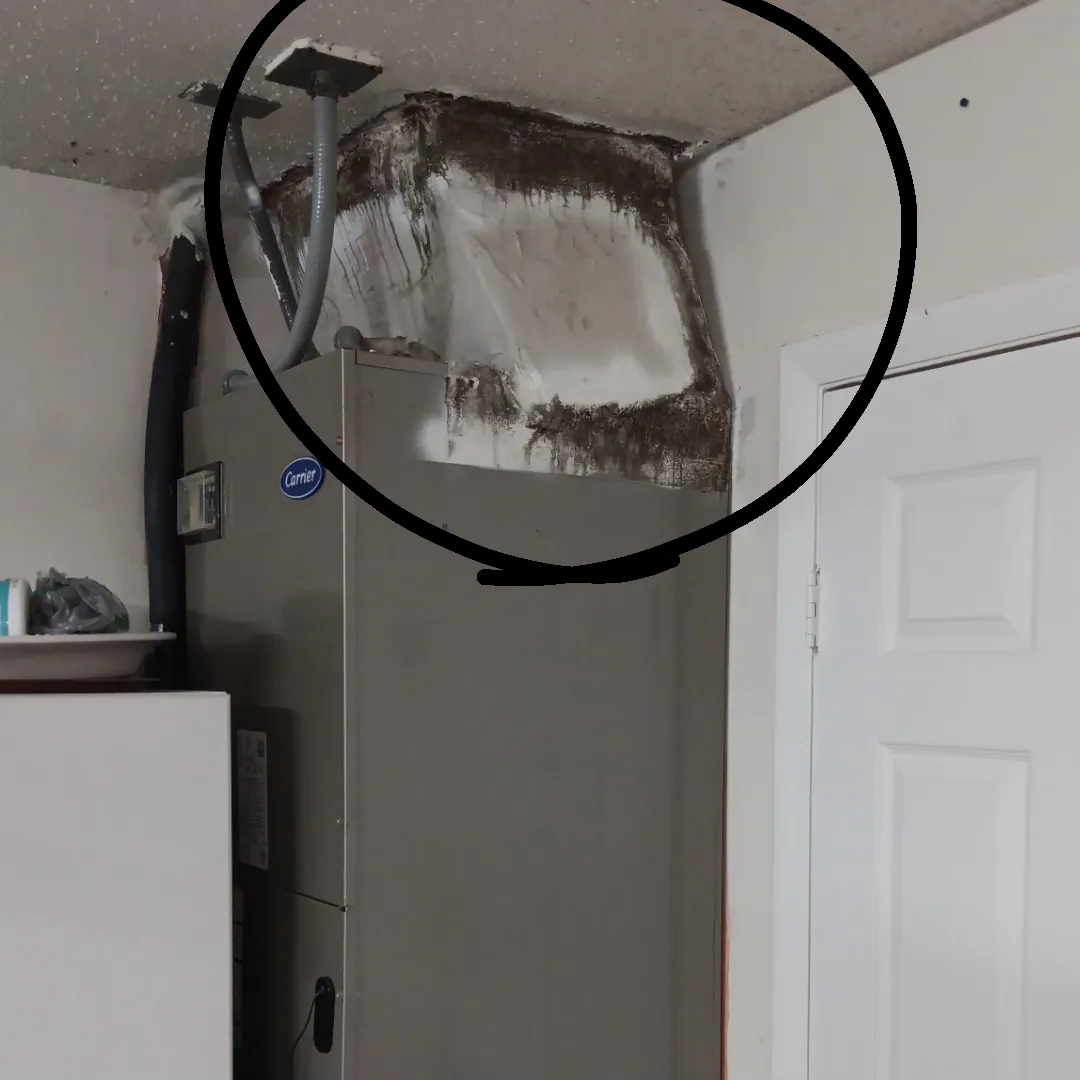
In Florida homes, mold often starts inside the AC, not on the walls. A wet coil and a dark air handler are a place mold can grow, and your ducts carry what grows there into every room. A general mold inspection can miss what’s happening inside the system. Ours starts there.
• Air handler: the cabinet, blower and drain pan.
• Evaporator coil: where moisture collects every time the AC runs.
• Ductwork: supply and return ducts, including flex duct and duct board, which mold can grow into.
• Lab-confirmed sampling: samples are sent to a lab to confirm what is there.
• Written report: what was found, where it was found and what the lab confirmed.
• A musty or dirty-sock smell when the AC turns on
• Black or dark spots around vents or on the air handler
• Allergy-like symptoms that ease when you leave the house
• Humidity in the house staying above 55%
• Water around the air handler or a drain line that keeps clogging
People react to mold differently. One family member can have headaches, congestion or breathing trouble while everyone else feels fine. Others not feeling sick doesn’t mean the air is harmless. An assessment shows what is in the system.
Mold isn’t the only thing that affects your air. See our indoor air quality testing.
• Florida-licensed mold assessor: MRSA5365
• Florida-certified air conditioning contractor: CAC1819318
• BPI-certified company
It is an inspection of the air handler, evaporator coil and ductwork by a licensed mold assessor, with samples sent to a lab to confirm what is there. You get a written report.
By lab testing. A visual check can’t confirm mold, so samples from the system go to a lab.
It is common, but it is not normal. A correctly designed and installed AC should not grow mold.
Our assessments specialize in HVAC systems: the air handler, evaporator coil and ductwork.
Homeowners across Central Florida, from Ocala and The Villages to Orlando.
Call 352-358-5537 to schedule a mold assessment of your HVAC system.
Want to stop mold from growing in your AC? Mold grows where moisture builds up inside the system. We find what is causing that moisture and correct it, so mold has nothing to grow on.

Look up FL HVAC Services on Google and you’ll see a line most AC companies don’t have: “Home energy auditing recognized by the US Dept. of Energy.” Tap it and the Energy Skilled badge pops up, with a link to Energy.gov.
Nobody can add that to a business listing themselves. Not us, and not a marketing company. The U.S. Department of Energy verifies the credential and reports it to Google, and Google puts it on the listing.
What it means for your home: we look at your house and your AC as one system. How outside air leaks in, how humidity builds up, how air moves from room to room, and why some homes end up with stale, stuffy air that makes people feel worse inside than out. Then we design and fix your system for what your home actually needs.
✓ Verified by the U.S. Department of Energy
✓ Shown on our Google listing by Google itself
✓ Trained in humidity, air leaks, airflow and indoor air quality
FL HVAC Services serves homeowners across Central Florida, including: